aden
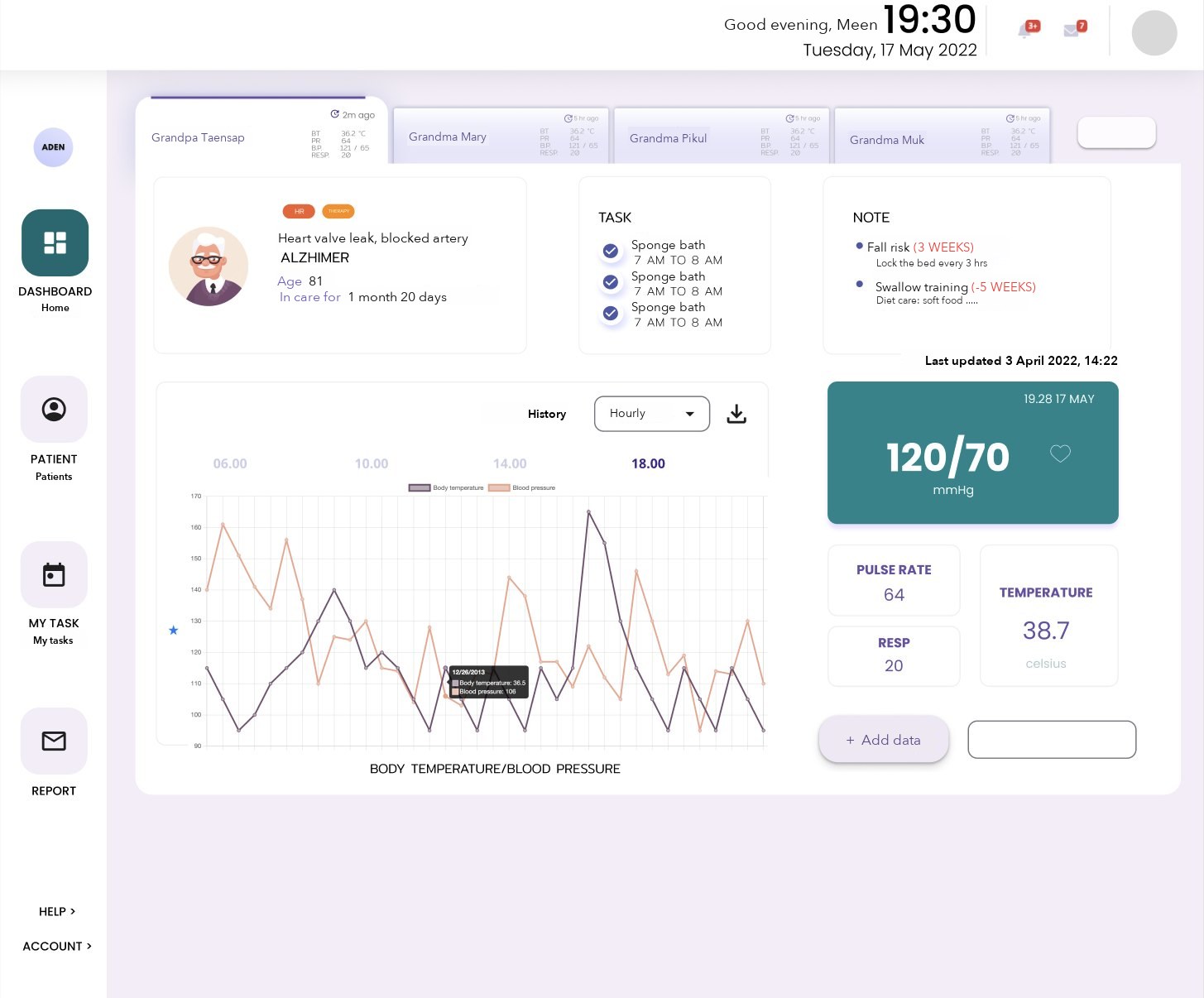
Nurses in aged-care homes were tracking patients on paper and sending sensitive notes over LINE. Aden is a cloud medical record built for their care team, and for the patient's family.
Aden started as my capstone at CMKL University (Carnegie Mellon × KMITL), built by three of us from the M.Sc. cohort. After the course I kept it going: I formed a new team with people who cared about the same problem, and we were selected for the Katalyst / Stanford Startup Launchpad in 2023. When our developer left mid-project, we put the remaining time into research and the market, and finished with a Figma proof of concept and a business case instead of a coded build. I led the project, and drove the research and product design myself: interviewing care staff, mapping their workflow, defining features and use cases, and prototyping the system in Figma.
- Role
- Project lead: research, product design and business analysis
- Team
- Capstone: 3 classmates from the CMKL cohort. Then a new team I formed to take it further. The developer left mid-project.
- Context
- M.Sc. capstone, CMKL University →︎ selected for Katalyst / Stanford Startup Launchpad 2023
- Methods
- 12 on-site interviews, workflow mapping, competitor and market review, use cases, card sorting, Figma
The problem
Private rehab and residential aged-care centres in Thailand are growing fast as the population ages. They are held to hospital-level care standards, but most still run on paper and chat apps. We found four shared problems:
- ACare standards are costly to keep. Owners and head nurses spend hours training staff and checking that every action follows the standard.
- BRecords are hard to track. Vital signs are written on paper several times a day, so reports are slow, duplicated and prone to error.
- CThe team talks on the wrong tool. Staff photograph patient notes and share them in LINE groups, mixing sensitive data with casual chat.
- DFamilies are left guessing. Each patient has a separate LINE group, nurses juggle dozens of them, and updates get missed.
Research
Research came first. Before drawing a single screen, we went on site and listened to the people who do the work.
Who we talked to
- 4DoctorsPublic and private hospitals, a clinic, and a doctor who runs a hospital's information team
- 3NursesTwo head nurses, including one who adapts focus charting for an orthopaedic unit, and a registered nurse caring for 5 patients at a time
- 3Care-centre ownersNurse and doctor founders running residential and rehab centres
- 1PhysiotherapistFreelance, visiting patients about twice a week
- 1Family carerThe decision-maker paying for his grandmother's care
How
Each interview started open-ended: "walk me through a day at work". We recorded every session, took notes live, then grouped what we heard by problem until clear themes appeared. We also built a glossary of medical terms, such as focus charting and the Thai patient-referral system, so we could follow the conversation in the care team's own language.
A nurse's day, mapped
- Vital signs, first round
- Shift change · morning round and care-plan check
- Vital signs
- Afternoon round
- Vital signs
- Charting and weekly summary
- Shift change · handover notes
- Vital signs
Plus a team meeting every Friday at 15:30. Every step was on paper or in LINE.
What we heard
"I am having pain in completing the care plans to meet the standard."Head nurse · about 4 hours a week checking her team's work
"I need to handle many tasks for the treatment, so I have no time for other tasks."Nurse
Doctors had to hunt for paper notes to check dates, and weighed the risk of every hospital referral.Doctors
Families wanted reassurance that records were current, and someone to tell them the next step.Patients and families
Market and competitors
Thai record systems focus on billing, registration and stock. Large international systems start at about US$729 a month and are built for hospitals. None handled long-term care well: care plans, goal tracking and focus-charting notes were missing. We also compared aged-care markets in Japan, South Korea, Singapore and Malaysia, then chose Thailand as the first market.
Design
We grouped every pain point and idea into four themes: measuring quality of care, time management, communication and productivity. Then we prioritised the features most likely to solve the main problems first.
- 1Use cases for the key journeys: a head nurse creates and assigns a care plan, nurses record and review a patient summary, and the team shares reports.
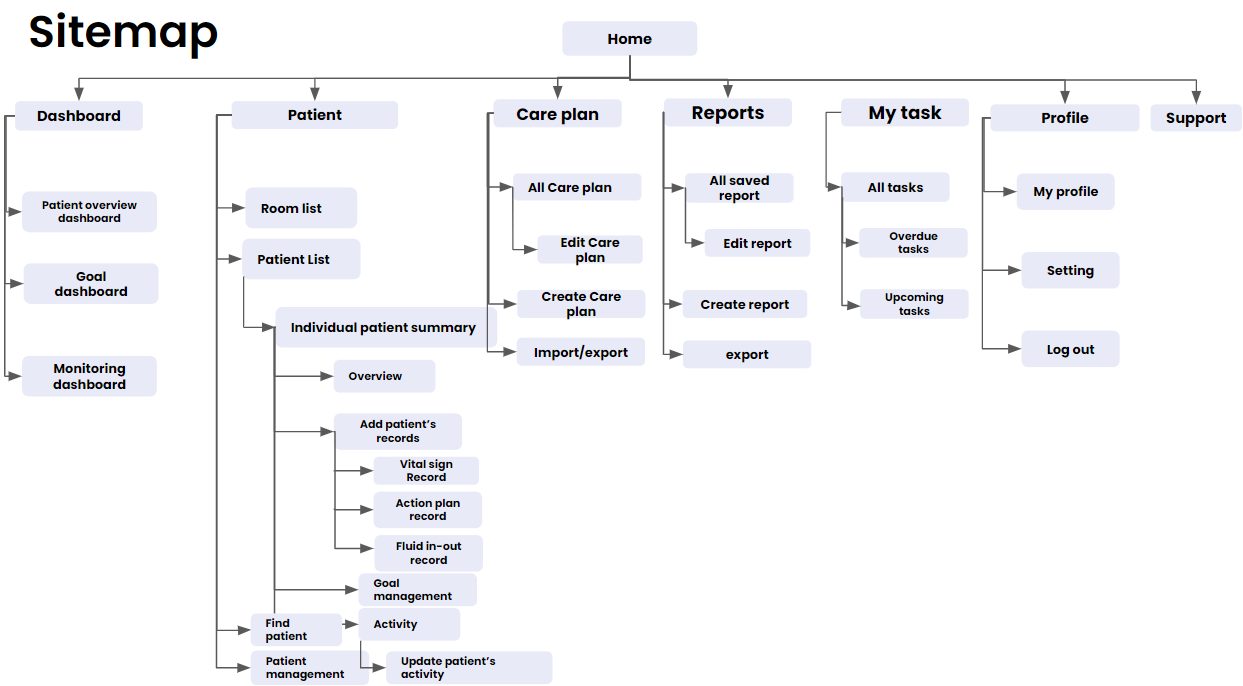
- 2Card sorting and a sitemap to shape the information architecture: dashboard, patients, care plans, reports, my tasks, profile and support.
- 3A Figma prototype as the proof of concept, built around the real workflow of a rehab centre.
The solution
Aden puts one patient record in the middle of the whole care team. Head nurses build care plans with goals and actions. Nurses log vital signs, fluids and focus-charting notes from a phone at the bedside. Each nurse also gets their own day: overdue and upcoming tasks, and how much of the plan is done. Everyone sees the same live picture, and families get a secure view instead of a chat group.
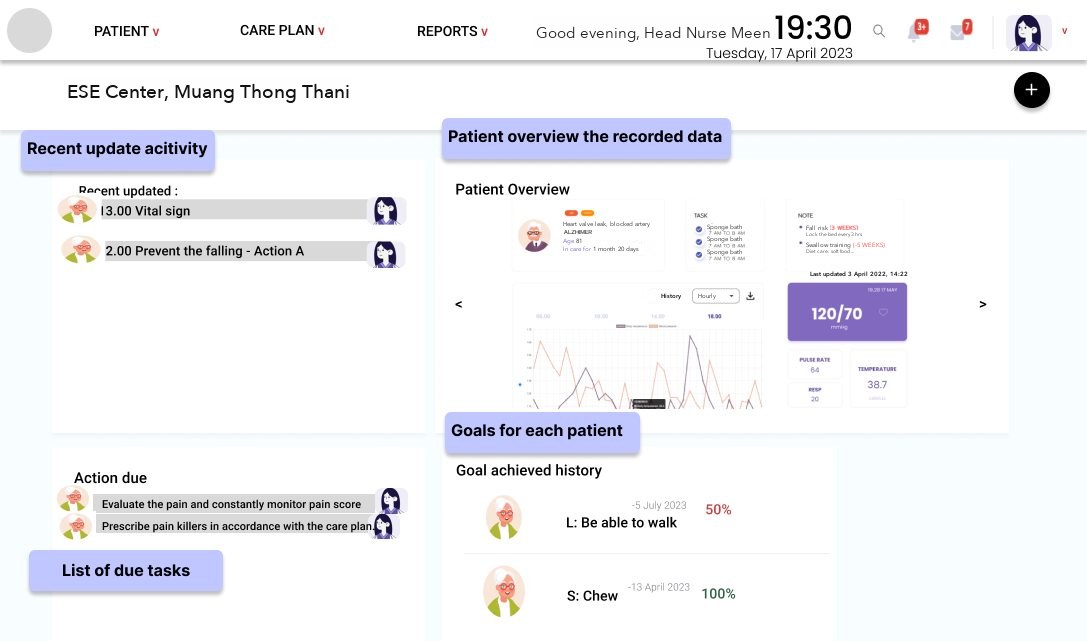
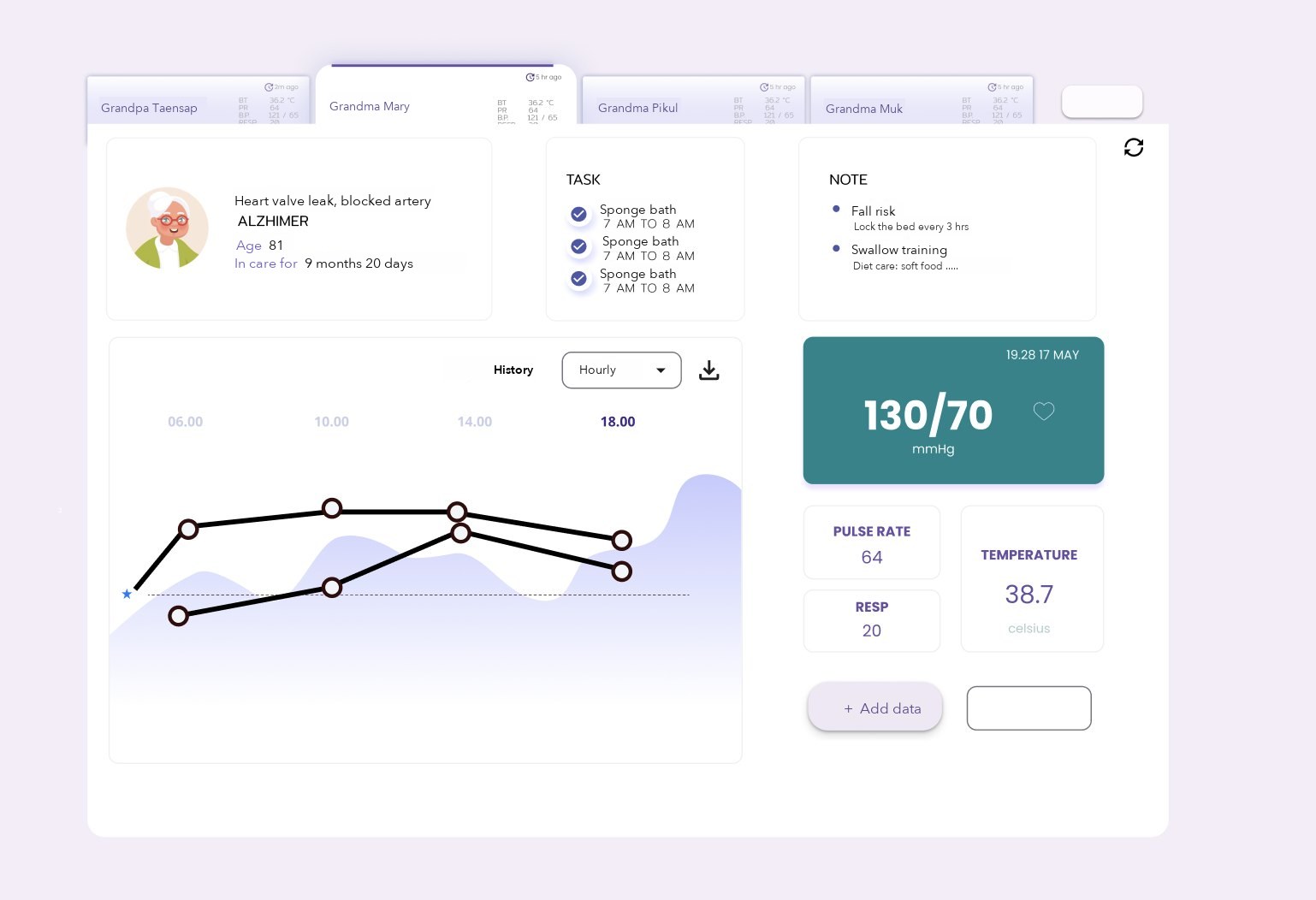
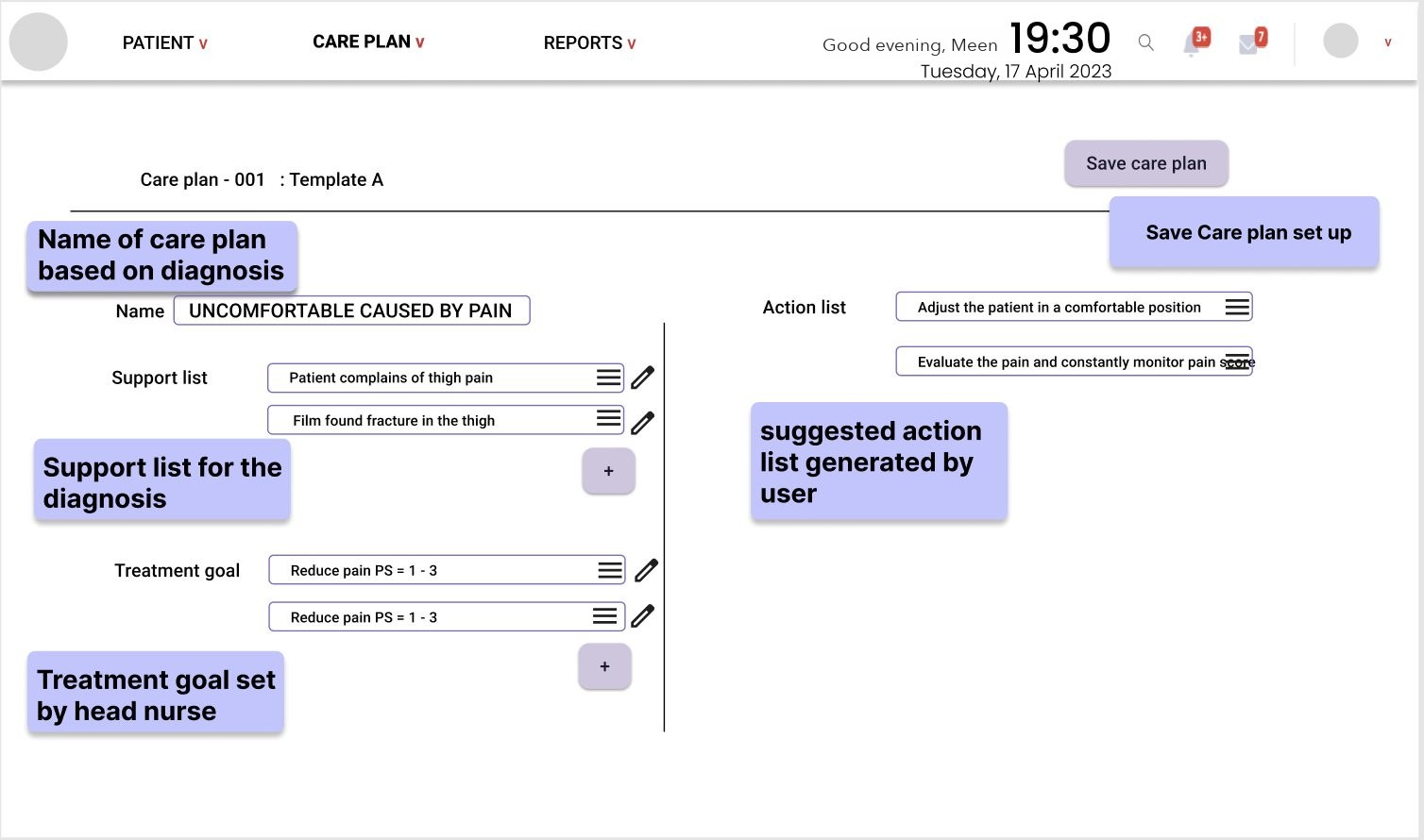
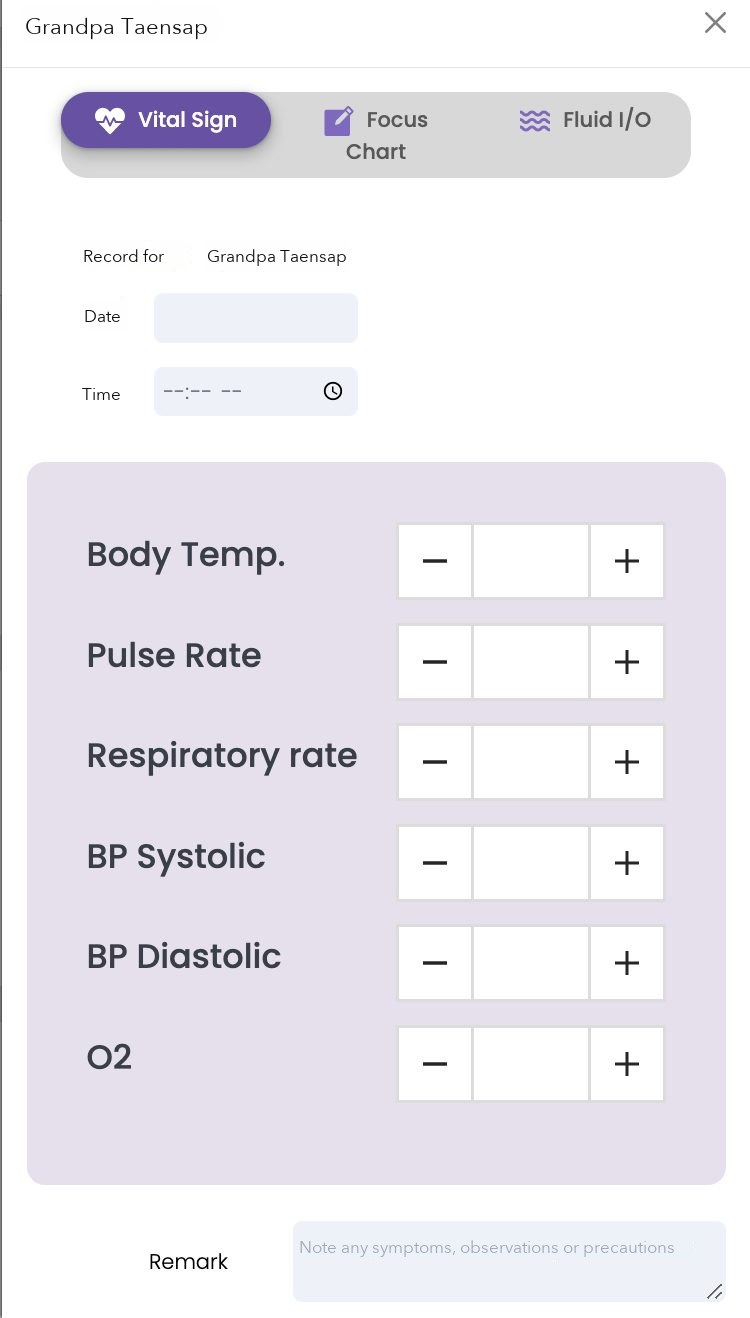
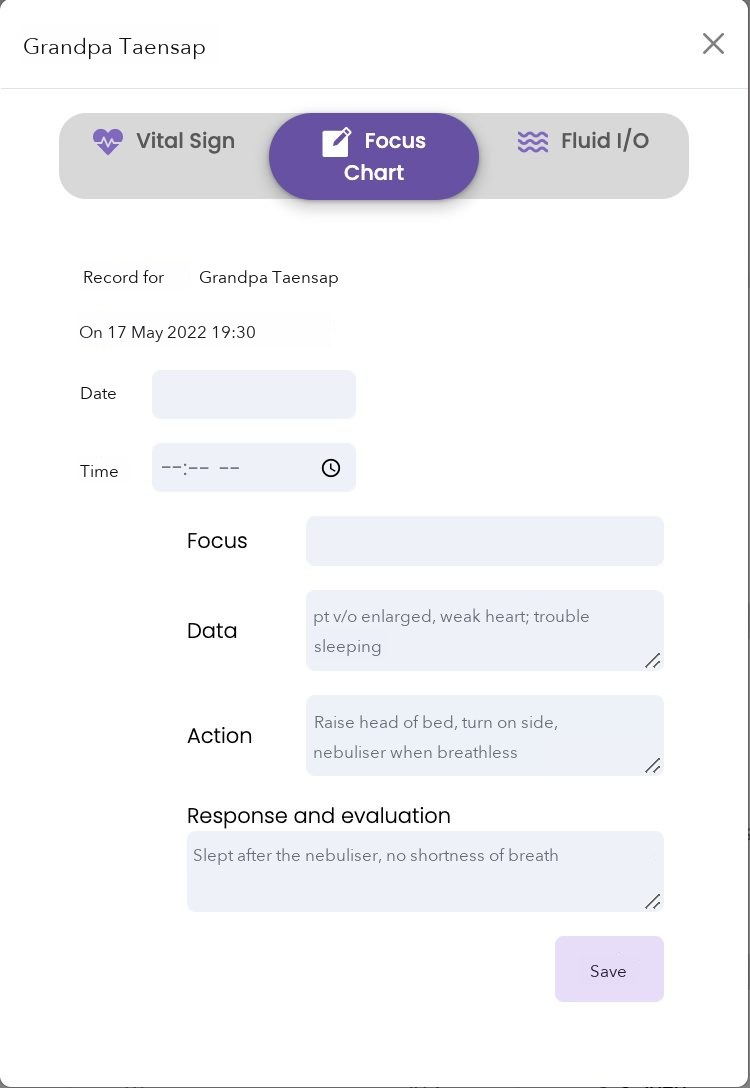
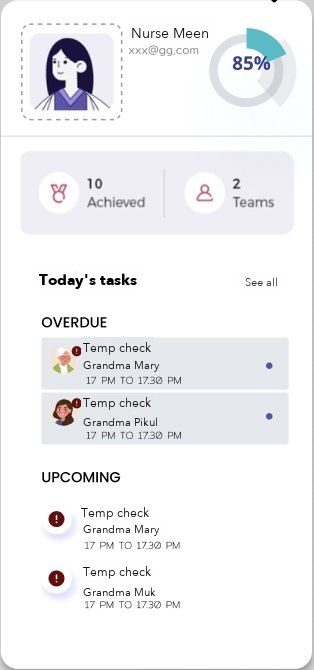
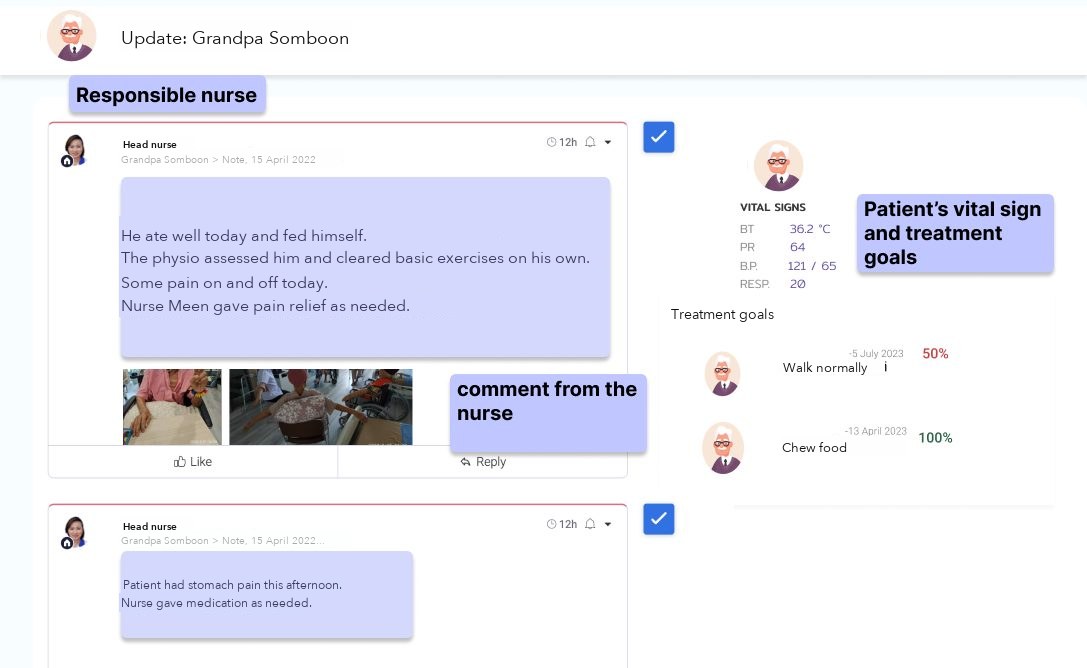
Screens use sample data, translated from the Thai prototype. Hover an image to see it in colour.
Business case
With no developer, the end of the project went into proving demand: market sizing, pricing and a first customer.
We designed Aden as a subscription for small to large care centres, with add-ons for a family portal, hardware and AI forecasting. We sized the market from Thai wellness centres and clinics up to Southeast Asian health and wellness groups, planned a first rollout with ESE Wellness Center, an elderly rehab centre, and built a five-year revenue and cost model.
What I took away
Aden outlived the classroom. I took a capstone, rebuilt the team around people who shared the problem, and got it into a startup programme.
Losing our developer halfway changed the plan, not the goal. We stopped chasing a coded build and went deeper on what we could prove: the users, the workflow and the market. It taught me to re-scope fast and keep delivering with the team you have.
Aged care runs on small, repeated tasks done under pressure. Software only helps if it fits the shift: fast entry at the bedside, the care plan always in view, and one place for the team and the family. These are the same requirement, workflow and stakeholder skills I use as a business analyst and project manager.